In today’s highly competitive business landscape, companies are constantly searching for ways to outperform rivals, attract loyal customers, and achieve sustainable growth. Many organizations invest heavily in technology, marketing campaigns, automation, and expansion strategies. Yet despite these investments, only a small percentage of businesses consistently rise above the rest.
What separates truly successful companies from those that struggle to survive?
The answer is not always advanced software, massive funding, or celebrity branding. The real secret weapon often lies beneath the surface: a strong company culture driven by people, innovation, and adaptability.
Successful companies understand that long-term growth comes from building an environment where employees thrive, customers feel valued, and innovation becomes a natural part of daily operations. While competitors focus only on profits, industry leaders focus on creating systems and values that generate profits naturally over time.
This hidden advantage has become the defining factor behind many of the world’s most admired organizations.
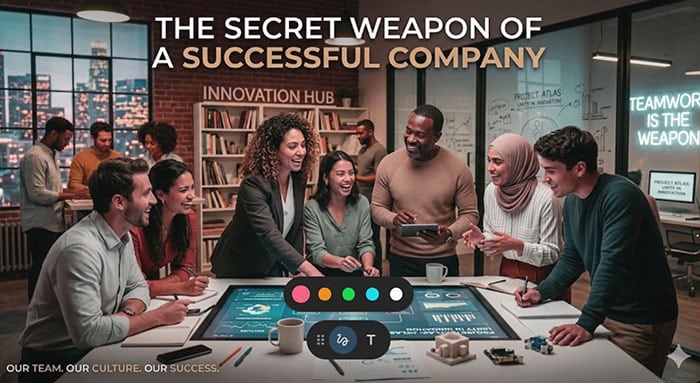
Company Culture: The Invisible Engine of Success
Company culture is more than motivational posters on office walls or occasional team-building activities. It represents the shared values, behaviors, and attitudes that guide how people work together.
Businesses with healthy cultures often experience:
- Higher employee engagement
- Better customer satisfaction
- Increased productivity
- Lower staff turnover
- Stronger innovation
Employees who feel respected and appreciated are far more likely to contribute creative ideas and maintain high performance levels. When workers genuinely care about their company’s mission, they become emotionally invested in achieving success.
On the other hand, toxic workplaces drain motivation and reduce efficiency. Even talented employees eventually lose enthusiasm when they feel ignored, overworked, or undervalued.
Successful companies recognize that people are their greatest asset. They invest in leadership development, open communication, and employee well-being because they understand the long-term return on these investments.
Leadership That Inspires Instead of Controls
One of the most powerful secret weapons in business is effective leadership. Exceptional leaders do more than assign tasks and monitor performance. They inspire confidence, encourage collaboration, and create a clear sense of direction.
Employees are more productive when they trust their leaders. Trust creates psychological safety, allowing people to share ideas without fear of criticism or failure.
Modern leadership is shifting away from rigid command-and-control management styles. Instead, successful organizations prioritize:
- Transparency
- Empathy
- Accountability
- Mentorship
- Adaptability
Leaders who actively listen to employees often uncover valuable insights that improve products, customer experiences, and internal operations.
In many cases, innovation starts from the bottom of the organization rather than the top. Great leaders understand this and create systems where every voice matters.
Innovation as a Continuous Process
Innovation is another hidden strength behind successful companies. However, innovation does not always mean inventing revolutionary technology. Sometimes it involves small but meaningful improvements that enhance customer experiences or streamline operations.
Companies that embrace innovation continuously adapt to changing market conditions. They monitor consumer behavior, study industry trends, and remain open to experimentation.
Businesses that resist change often become outdated. History is filled with examples of companies that once dominated their industries but failed because they ignored shifting customer expectations.
Successful organizations treat innovation as an ongoing process rather than a one-time event. They encourage curiosity and allow employees to test new ideas without excessive fear of failure.
This mindset creates resilience and flexibility, both of which are essential in unpredictable economic environments.
Customer Experience as a Competitive Advantage
Another major secret weapon is an exceptional customer experience.
Modern consumers have countless options available to them. Price and product quality remain important, but customer experience increasingly determines whether people stay loyal to a brand.
Successful companies focus intensely on understanding customer needs. They gather feedback, analyze behavior patterns, and personalize interactions whenever possible.
A positive customer experience creates emotional connections that competitors struggle to replicate.
Simple actions can have a powerful impact, such as:
- Responding quickly to customer inquiries
- Providing personalized recommendations
- Offering transparent communication
- Solving problems efficiently
- Rewarding loyal customers
Companies that prioritize customer satisfaction often generate strong word-of-mouth marketing, which remains one of the most effective forms of promotion.
Satisfied customers naturally recommend businesses to friends, family, and online communities, helping brands grow organically.
Adaptability in a Rapidly Changing World
The business world changes faster than ever before. Economic shifts, technological advancements, and global events can dramatically transform industries within months.
Successful companies survive because they adapt quickly.
Adaptability allows organizations to respond effectively to uncertainty instead of becoming paralyzed by it. Flexible businesses can adjust strategies, adopt new technologies, and explore alternative revenue streams when necessary.
During challenging periods, adaptable companies often discover opportunities that others overlook.
For example, many businesses accelerated digital transformation during global disruptions. Companies that quickly embraced remote work, e-commerce, and digital communication tools maintained momentum while slower competitors struggled.
Adaptability requires both strategic thinking and a willingness to evolve. Organizations that cling too tightly to old methods risk becoming irrelevant.
Data-Driven Decision Making
Another powerful secret weapon is the intelligent use of data.
Successful companies no longer rely solely on intuition when making major decisions. Instead, they use data analytics to understand customer behavior, market trends, and operational performance.
Data helps businesses:
- Identify growth opportunities
- Improve marketing strategies
- Reduce unnecessary costs
- Optimize workflows
- Predict future demand
However, data alone is not enough. Companies must also interpret information correctly and apply insights strategically.
Organizations that combine data analysis with human creativity gain a significant competitive edge. They can respond faster to changes while making smarter, evidence-based decisions.
In the digital age, information has become one of the most valuable business assets available.
Employee Empowerment and Ownership
One overlooked characteristic of successful companies is employee empowerment.
Employees perform better when they feel trusted and empowered to make decisions. Micromanagement often reduces creativity and slows productivity.
High-performing organizations encourage ownership at every level. Team members are given clear goals, resources, and autonomy to solve problems independently.
Empowered employees tend to:
- Take initiative
- Innovate more frequently
- Deliver better customer service
- Collaborate effectively
- Feel greater job satisfaction
This approach creates a stronger sense of responsibility and engagement throughout the organization.
Companies that empower their workforce also build future leaders internally, reducing reliance on external recruitment for management roles.
Strong Brand Identity and Purpose
Modern consumers increasingly support businesses that stand for something meaningful.
Successful companies often possess a clear brand identity and purpose beyond making profits. They communicate values that resonate emotionally with customers and employees alike.
Purpose-driven organizations inspire loyalty because people want to feel connected to brands that align with their beliefs and aspirations.
A strong brand identity helps companies differentiate themselves in crowded markets. It creates consistency across products, messaging, customer experiences, and company behavior.
Businesses with authentic missions often enjoy stronger long-term relationships with their audiences.
However, authenticity is essential. Consumers can quickly recognize when companies promote values purely for marketing purposes without genuine commitment behind them.
Collaboration and Teamwork
No company achieves long-term success through individual talent alone.
Collaboration remains one of the most underestimated business advantages. Organizations that encourage teamwork benefit from diverse perspectives, improved problem-solving, and greater creativity.
Departments that communicate effectively can respond faster to challenges and avoid unnecessary inefficiencies.
Successful companies create environments where collaboration feels natural rather than forced. They break down silos and encourage knowledge sharing across teams.
When employees work together toward shared goals, organizations become more agile and innovative.
Strong teamwork also improves workplace morale and builds stronger professional relationships.
The Real Secret Weapon
Ultimately, the secret weapon of successful companies is not a single strategy, technology, or product. It is the ability to build a resilient organization powered by people, trust, innovation, and adaptability.
Technology can be copied. Products can be replicated. Marketing trends constantly evolve.
But a company that develops a strong culture, empowers employees, prioritizes customers, and embraces continuous improvement creates an advantage that competitors struggle to duplicate.
The most successful businesses understand that sustainable growth is built from within. They invest in their people, remain open to change, and focus on creating long-term value instead of chasing short-term wins.
In an era defined by rapid transformation and intense competition, the companies that thrive will not necessarily be the biggest or the richest. They will be the organizations that understand the true power of human connection, strategic adaptability, and purposeful leadership.